

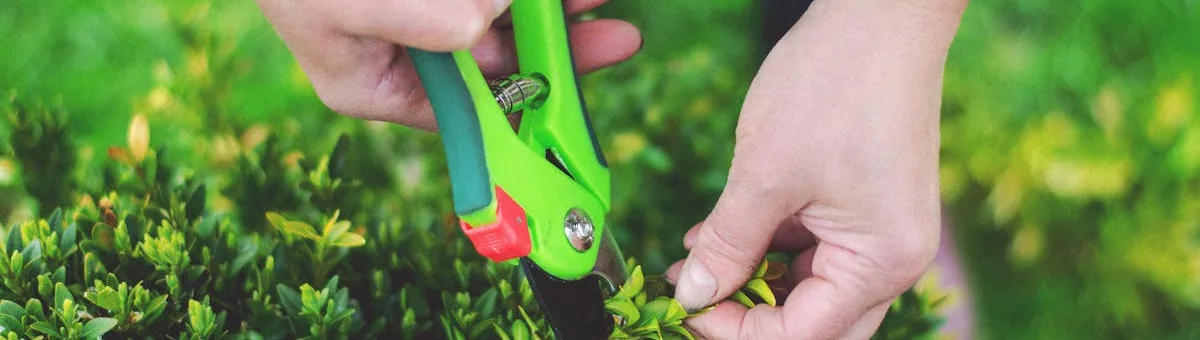
You've been deadheading roses with pruning shears that tear the stems instead of cutting them cleanly. Or you want to buy your first quality shears and don't know if spending $50 on Felco is worth it when basic shears cost $10. This comparison covers the best pruning shears of 2026 for durability, cutting performance, and value across professional and home gardener budgets.
Pruning shears — also called hand pruners or secateurs — are the single most-used cutting tool in any serious garden. A quality pair cuts rose stems, deadheads perennials, shapes small shrubs, and harvests herbs and vegetables all season long. Unlike most garden tools, pruning shears reward investment: a $50 pair of Felco shears used with care will still be making clean cuts in 25 years, while a $12 budget pair typically dulls within 18 months. Understanding what separates a quality pair from an inferior one ensures you buy once, buy well, and stop replacing blades that fail after one season.
▷ Best pruning shears of 2026
Felco F-2 Pruning Shear — Professional Swiss-Made
- ✓ Bypass design with curved blades
- ✓ Cuts branches up to 1.5 inches diameter
- ✓ Precision-machined aluminum body
- ✓ Lifetime warranty and spare parts available
- ✓ Hand-sharpened premium blade
- ✓ Gold standard for professional gardeners
Price from Amazon.com · ships within US
Fiskars Steel Bypass Pruning Shear — Best Value
- ✓ Bypass steel blades — clean cuts
- ✓ Cuts up to 0.75 inch diameter branches
- ✓ Ergonomic comfort grip handle
- ✓ Lifetime warranty
- ✓ Affordable quality option
- ✓ Great for home gardeners and beginners
Price from Amazon.com · ships within US
Corona BP 3180D Bypass Pruning Shear — High-Capacity
- ✓ Bypass design with serrated cutting blade
- ✓ Cuts branches up to 1.25 inches
- ✓ Lightweight extruded aluminum body
- ✓ Cushioned comfort grip
- ✓ Made in the USA
- ✓ Lifetime warranty
Price from Amazon.com · ships within US
Best pruning shears by budget: under $25, $50, $100
Pruning shears range from $15 to $90 — but more expensive isn't always more capable for casual gardeners. Here's the honest breakdown by spend:
| Budget | Best pick | Cuts up to | Best for |
|---|---|---|---|
| Under $20 | Fiskars 91095935J Bypass | 5/8 inch (1.6 cm) | Light pruning, occasional use |
| Under $35 | Corona BP 3180D ClassicCUT | 1 inch (2.5 cm) | Regular use, fruit trees, roses |
| Under $50 | Felco F-6 Compact (smaller hands) | 3/4 inch (2 cm) | Daily gardening, ergonomic for arthritis |
| Under $100 | Felco F-2 Classic Bypass | 1 inch (2.5 cm) | Lifetime tool — replacement parts available 30+ years |
Comparison: blade type, cutting capacity & features
| Model | Blade Type | Cut Capacity | Price Range | Best For |
|---|---|---|---|---|
| Felco F-2 | Bypass | 1.5 in | $50–65 | Professionals, lifetime investment |
| Fiskars Steel | Bypass | 0.75 in | $25–35 | Home gardeners, roses & flowers |
| Corona BP 3180D | Bypass | 1.25 in | $35–45 | Thicker branches, shrub pruning |
Bypass vs anvil: which pruning shear design is right?
How bypass shears work
Bypass shears have two curved blades that overlap like scissors — the moving upper blade passes by the lower blade, making a single clean cut. This design crushes plant tissue minimally, promoting rapid healing. The clean cut triggers the plant's natural repair response, sealing the wound quickly and reducing disease entry.
How anvil shears work
Anvil shears have a sharp upper blade that presses down against a flat lower base (the anvil). They require less hand strength to cut but create a crushing action that can split or fray stems, especially in tender green wood. Anvil shears shine for cutting dead wood, dried branches, and thick woody material where crushing doesn't harm living tissue. Never use anvil shears on living plants if you can avoid it.
The verdict: when to choose each type
Bypass shears are the choice for all work with living plants, roses, delicate flowers, and any situation where a clean cut matters. Anvil shears are specialty tools for dead wood only — most gardeners will rarely need them. If you're buying your first pair of pruning shears, choose bypass without hesitation.
Professional grade vs domestic grade pruning shears
Professional-grade shears (Felco, Swiss-made Corona models) use precision manufacturing, premium steel, and hand-honed blades. They cost 2–3× more but last 30+ years. Springs, blades, and handles are individually replaceable. Professional shears are passed down through generations of gardeners.
Domestic-grade shears (Fiskars, budget Corona models) offer 90% of the cutting performance at 50% of the cost. They last 8–15 years with care. Handles and springs eventually wear; many aren't replaceable, forcing you to buy new shears rather than repair them.
For home gardeners who prune occasionally (a few hours monthly), Fiskars offers excellent value. For professionals or enthusiasts who prune daily, Felco is the investment that pays for itself through durability and resale value.
How to prune correctly: cuts that heal vs cuts that harm
The 45-degree angle rule
Position your shears so the cut is made at a 45-degree angle, sloping away from the nearest bud. This angle sheds water away from the new bud, preventing disease entry at the cut surface. Never cut perpendicular (horizontal) to the stem — this creates a flat surface where water pools and disease takes hold.
Distance from the bud: the quarter-inch rule
Make your cut approximately one-quarter inch above an outward-facing bud. Too close — less than one-quarter inch — and you risk damaging the bud itself. Too far — more than half an inch — and you leave a stub that dies back, creating an entry point for disease. The quarter-inch sweet spot balances these risks.
The branch collar: never flush cut
For larger branches, never cut flush against the main stem (a practice called flush cutting that was standard 20 years ago but is now known to harm healing). Instead, identify the branch collar — the slightly raised ring where the branch meets the stem. Cut just outside this collar, leaving it intact. The branch collar contains specialized cells that rapidly wall off the wound, healing it faster than a flush cut ever could.
What NOT to prune in winter
Avoid major pruning during winter dormancy on tender plants like roses and hydrangeas. Winter pruning stimulates new tender growth that frost will kill, wasting the plant's energy. Spring — once new growth begins — is the correct time. Exceptions: dead branches can be removed any time without harm, and hardy shrubs like forsythia tolerate winter pruning.
Blade maintenance: keep your shears sharp
Removing sap buildup with rubbing alcohol
After each pruning session, wipe the blades with a cloth dampened in 70% isopropyl alcohol or a 1:10 bleach-to-water solution. Dried plant sap hardens on the blades, making them sticky and hard to close. Sap also harbors fungal spores and bacteria — cleaning between plants (especially when pruning diseased plants) prevents spreading infection. Keep a small bottle of rubbing alcohol in your pruning kit; it's one of the most valuable disease-prevention tools in the garden.
Sharpening with a whetstone
Dull shears crush more than they cut. Sharpen annually using a fine whetstone held at a 30-degree angle to the blade. Open the shears fully. Hold the whetstone to the cutting blade only — never sharpen the lower blade. Push the stone away from you along the cutting edge in smooth, consistent strokes. After 5–8 strokes, test the edge with your thumbnail (it should catch, not glide). Remove the burr from the flat inner face with a single light pass of the stone held flat. Oil and reassemble. Total time: 5 minutes.
Oiling the pivot bolt
A single drop of light machine oil on the pivot bolt keeps the mechanism smooth and reduces hand fatigue. Too much oil attracts dust; a small drop is all you need. Apply after sharpening or monthly during heavy use.
Blade adjustment and realignment
Over time, the upper blade can shift slightly, causing uneven cuts. Most pruning shears have an adjustment screw at the pivot. Loosen this screw slightly — just enough that the blade moves freely — and check that the blades align perfectly when closed. If they don't touch evenly along their entire length, adjust the screw until they do. Proper alignment ensures clean cuts and reduces the chance of blade damage.
When to prune what: seasonal pruning guide
Spring pruning: roses and tender shrubs
Late winter into early spring (after last frost) is the ideal time to prune roses, hydrangeas, butterfly bush, and other tender shrubs. Prune when new growth is just beginning — you'll see the buds swelling. Remove all dead wood (cut back to live, green tissue), thin overcrowded canes by removing the thinnest oldest canes at the base, and shape the plant by cutting back to outward-facing buds at your desired height. Spring pruning stimulates vigorous new growth that flowers prolifically.
Summer pruning: deadheading and light shaping
During the growing season, deadhead spent flowers regularly — this encourages more blooms. Remove crossing branches and any obviously diseased wood immediately. Major reshaping should wait for spring or fall; summer pruning can stress heat-sensitive plants. Summer is also the time to thin dense foliage to improve air circulation around roses and fruit trees, reducing fungal disease pressure.
Fall pruning: evergreens and shape maintenance
Early fall is the time to prune evergreens (boxwood, privet, yew) if you want a formal shape — they heal quickly before dormancy sets in. Avoid heavy fall pruning on tender deciduous shrubs and trees; it stimulates tender new growth that winter will damage. The exception: remove any dead or obviously damaged wood from tender plants in fall so disease doesn't overwinter in the wood.
Choosing Pruning Shears for Your Hand Size and Strength
Pruning shears are not a one-size-fits-all tool. The wrong size causes hand fatigue, repetitive strain injuries, and inefficient cutting. Manufacturers have recognized this and now offer models explicitly sized for different hand geometries — this matters more than brand name or price point for day-to-day comfort.
Grip size and handle length: Most standard pruning shears (Fiskars, Felco F-2) are designed for a medium male hand. Gardeners with small hands will find the Fiskars Softgrip Micro-Tip or Felco F-6 (smaller-handed model) more comfortable — the smaller grip circumference allows full finger closure on the handle, which is where hand fatigue originates. Hands that don't fully close on the handle must grip harder to compensate, which becomes painful within 20–30 minutes of sustained pruning.
Hand strength and spring tension: The spring that opens the shears between cuts is one of the most overlooked specs. A strong spring requires more effort to close and is tiring for gardeners with arthritis, reduced grip strength, or smaller hand muscles. Look for shears with adjustable spring tension (Felco F-7 has this feature) or lower-tension springs. Ratchet mechanism shears (which cut through thick branches in multiple partial strokes) are the most accessible option for gardeners with limited hand strength.
Left-handed gardeners: Standard pruning shears operate right-handed — the upper blade overlaps to the right, which means left-handed users receive a slightly compressed, suboptimal cut. Felco and ARS both offer left-handed specific models with reversed blade geometry. For serious pruners, a dedicated left-hand model makes a noticeable quality difference in cut cleanliness.