

Petunia Types: Which One for Your Garden?
Grandiflora — Large, Showy Flowers
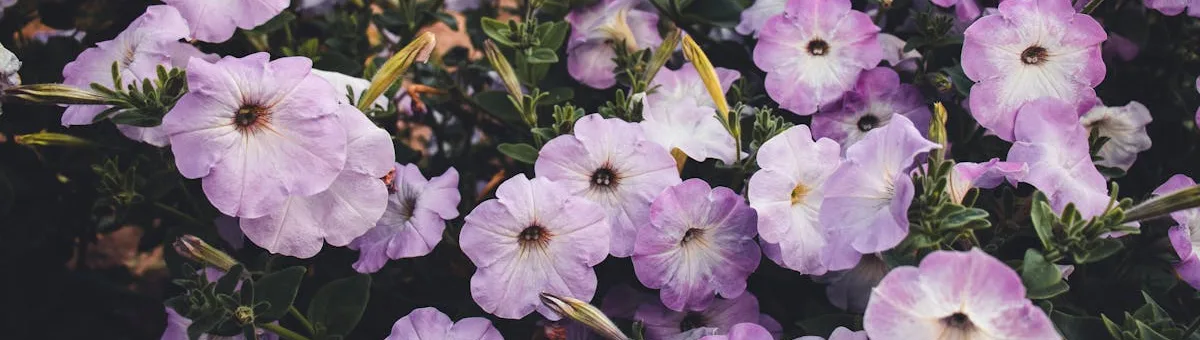
Grandiflora petunias produce large flowers (up to 4 inches / 10 cm diameter) in vibrant colors with decorative contrasting veining. They make the most visual impact of any petunia type but are also the most delicate: large flowers are damaged by heavy rain and require regular deadheading. Best suited to covered balconies or climates with dry summers. Double-flowered varieties (like 'Purple Pirouette') have filled, ruffled petals that are even more spectacular but more rain-sensitive. For dry-summer regions like the Pacific Coast or Southwest, they're an excellent choice.
Multiflora — Most Robust and Productive
Multiflora petunias produce smaller flowers (2–3 inches) but in much greater quantity, and crucially, they're far more resistant to rain and wind. They're the easiest petunias to grow and the best recommendation for beginners. They bloom continuously all season with minimal maintenance. The Celebrity, Carpet, and Duo series are standout performers in this category. For exposed, wind-prone balconies or regions with frequent summer rain (the Pacific Northwest, Upper Midwest), multifloras are the clear best choice.
Trailing Wave & Supertunia — Cascading Drama
Wave petunias (developed by Ball Horticultural) and Supertunias (PanAmerican Seed) are spreading, trailing varieties that extend 2–3 feet (60–90 cm) or more. They're perfect for hanging baskets, window boxes, and elevated containers where they cascade dramatically downward. They're self-cleaning (no deadheading needed), produce flowers continuously throughout the season, and are more heat-tolerant than grandifloras. Among the most popular trailing varieties: 'Wave Purple,' 'Easy Wave Pink,' and 'Supertunia Vista Bubblegum.' These are currently the best-selling petunia types on Amazon.com.
Milliflora — Compact and Prolific
Milliflora petunias produce very small flowers (1 inch / 2–3 cm) in extremely high numbers on compact plants that stay neat without pruning. The Fantasy and Picobella series are the most popular. They're ideal for small containers, border edging, and mixed arrangements where flower volume matters more than individual size. They're also the most shade-tolerant type, performing reasonably well with only 3–4 hours of direct sun.
Best Petunias for Containers 2026
For most container gardeners in the US, the best approach is buying established transplants in spring (available at garden centers and home improvement stores from April onward). If you want dozens of plants economically or prefer specific varieties not stocked locally, seed starting gives you the most options. All three picks below work beautifully in hanging baskets, window boxes, and large planters.
Easy Wave Petunia — Mixed Colors Seed Pack
- ✓ Easy Wave trailing/spreading type
- ✓ Mixed colors: pink, red, purple, white
- ✓ Self-cleaning — no deadheading needed
- ✓ Spread: 24–36 inches per plant
- ✓ Start indoors 10–12 weeks before last frost
- ✓ Continuous bloom May through first frost
Precio en Amazon.es · LATAM: comprueba tu Amazon local
Essential Petunia Care
Light and Location
Petunias require a minimum of 4–5 hours of direct sun per day to bloom well — 6–8 hours is ideal. In north-facing spots or heavy shade, they'll produce long stems but few flowers: they're simply not the right plant for shady conditions. South or southeast-facing balconies with all-day sun produce the most spectacular results. In very hot climates (the Desert Southwest, parts of the Southeast), afternoon shade during the hottest months (1–4 PM) can protect delicate flowers from heat scorch while still providing adequate morning sun.
Watering: The Drainage Rule
Petunias prefer consistently moist but never waterlogged soil. Water when the top inch of soil feels dry to the touch. In summer heat with small containers in full sun, this can mean watering daily. Overwatering signs: dark, mushy stem base and yellowing lower leaves. Underwatering signs: wilting flowers before midday and soil pulling away from pot edges. Always water at the base of the plant, not overhead — wetting flowers promotes rot, especially in grandifloras. Containers with ample drainage holes are non-negotiable: in pots without drainage, petunias rot within days.
Soil and Container Size
Petunias thrive in light, well-draining potting mix. The ideal blend: 70% quality potting soil + 20% perlite + 10% coarse sand. Avoid heavy or compacted soils. Container size matters: grandifloras and Wave types need at least a 10–12 inch (25–30 cm) container to develop properly; multifloras and millifloras adapt to 6–8 inch pots. Refresh potting soil at the start of each season — old, depleted soil doesn't support vigorous flowering even with heavy fertilizing.
Trailing Wave & Supertunia Petunias
Trailing Wave and Supertunia petunias produce cascading stems 2–3 feet long covered in flowers nonstop from late May through October without any deadheading. In hanging baskets or railing window boxes, they create dramatic curtains of color visible from street level. 'Wave Purple' and 'Easy Wave Burgundy' are the most popular varieties; 'Supertunia Vista Bubblegum' is beloved for its vivid magenta-pink with a white center and exceptional heat tolerance. They need larger containers (at least 12 inches diameter) for adequate root development and water more frequently than upright types due to their greater leaf surface area.
Supertunia Trailing Petunia — Live Plant, Assorted Colors
- ✓ Supertunia trailing series — no deadheading needed
- ✓ Assorted colors: pink, purple, red available
- ✓ Spread: 24–36 inches per season
- ✓ Live plant ready to transplant
- ✓ Continuous non-stop bloom May–October
- ✓ Excellent heat and humidity tolerance
Precio en Amazon.es · LATAM: comprueba tu Amazon local
Fertilizing: The Secret to Continuous Bloom
Regular fertilizing is essential for petunias to stay in flower for months. Apply a liquid fertilizer formulated for flowering plants — one that's high in potassium (K) and phosphorus (P) — every 7–14 days from late spring through early fall. Potassium is the nutrient most directly linked to flower production: a formulation like 5-10-10 or 5-10-25 makes a visible difference in both flower count and size. Avoid high-nitrogen fertilizers (like lawn feed) — they promote leafy growth at the expense of flowers. Container petunias exhaust their potting mix quickly in summer; without regular feeding, flower production drops dramatically after July.
For grandifloras especially, a slow-release granular fertilizer incorporated into the potting mix at planting (like Osmocote Plus) provides a consistent nutrient base, which you then supplement with liquid feed during peak bloom for maximum performance.
Growing Petunias from Seed
Growing from seed gives you access to specialty varieties unavailable locally and can be very economical when you need many plants. Petunia seeds are extremely fine — almost dust-like — so mix them with a pinch of dry sand for more even distribution when sowing. Surface-sow onto moistened seed-starting mix (do not cover with soil — petunias need light to germinate), then cover the tray with plastic wrap to maintain humidity. Maintain soil temperature at 70–75°F (21–24°C). Germination occurs in 7–14 days. Start seeds indoors 10–12 weeks before your last frost date for transplants ready to go outside in late April or May.
Petunia Grandiflora Mix — Premium Seed Variety Pack
- ✓ Grandiflora petunia mix — large-flowered varieties
- ✓ Mixed colors: purple, pink, red, white, bicolor
- ✓ 200+ seeds per pack
- ✓ Surface sow — needs light to germinate
- ✓ Start indoors 10–12 weeks before last frost
- ✓ Bloom first year: June through October
Precio en Amazon.es · LATAM: comprueba tu Amazon local
Regeneration Pruning: Flowers Until Fall
In mid-July through early August, petunias often become leggy, lose flower density, and develop woody-looking stem bases. Regeneration pruning revives them for a second flowering period lasting until the first frost. The process: using clean scissors or pruners, cut all stems back to just 4–6 inches from the base, remove all old flowers and dried material, fertilize immediately with a balanced or bloom fertilizer, and water thoroughly. The plant will resprout within 2–3 weeks with fresh growth and a renewed burst of flowers. This technique is especially effective on multiflora and grandiflora types. Wave and Supertunia types respond better to tip-pinching their longest trailing stems rather than full base cutback.
Pests and Common Problems
Aphids are the most frequent petunia pest, clustering on tender shoot tips and flowers, causing distortion and sticky honeydew residue. Treat with insecticidal soap spray or neem oil, directing spray at undersides of leaves and growing tips. Repeat every 5–7 days until populations are controlled. Botrytis (gray mold) can affect flowers in humid conditions, causing gray fuzzy patches; improve air circulation and avoid wetting flowers when watering. Caterpillars and tobacco budworm (specifically Helicoverpa zea) eat holes in flowers and buds — a common problem in the Southeast; control with Bacillus thuringiensis (Bt) spray, a safe biological pesticide. In hot, dry conditions, spider mites create yellow stippling on leaves; increase humidity and apply miticide if the infestation is severe.
For more balcony and container plant ideas, see our guide to annual flowers for containers and our spring bulbs guide.